PHOTO
78999.0
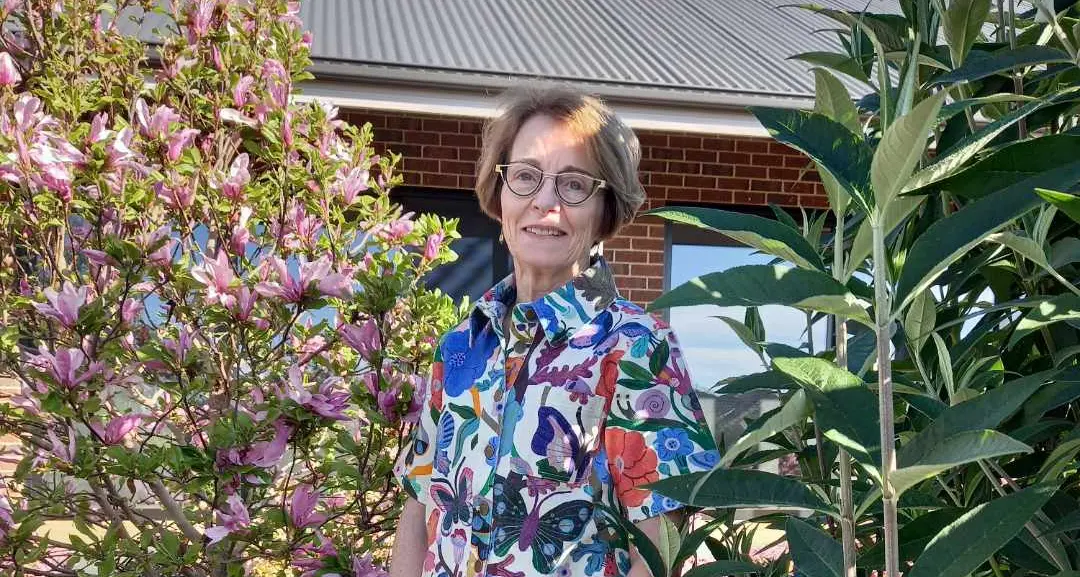
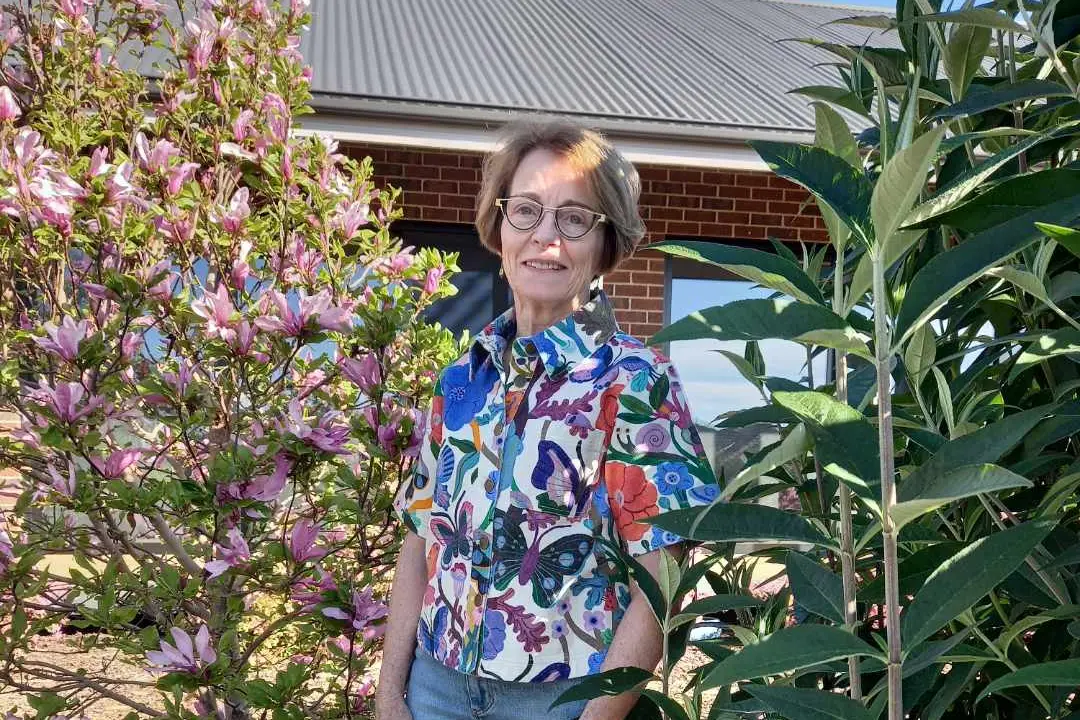
Carmel Ardern was born at the Old Hospital in Myrtleford but grew up in Mudgegonga.
She has lived in Beechworth for the past four-and-a-half years having lived on a small acreage abutting the Chiltern Ironbark National Park for 42 years.
What did you workwise?
For as long as I can remember I wanted to be a midwife. I trained as a nurse at the Mercy Hospital, Albury, and then moved to Sydney to study midwifery. Nursing gave me the ability to embrace many different aspects of health care from midwifery to urology to community aged care.
What led you to your role/career?
Post-school education was encouraged by my parents, however when I was making career choices, university was not an option due to the cost. This was just at the beginning of the Whitlam government’s introduction of free tertiary education.
What did you love about your work?
Nursing has given me the opportunity to become a lifelong learner. As healthcare is a people-based environment I have loved being able to empower people to make informed decisions for their care.
What do you do in the community?
I volunteer with the Beechworth Green Team each fortnight, which is part of the Beechworth Heritage group. This group is supported by Indigo Shire to maintain our town’s public gardens and has been a great way to meet people.
Is there an important community issue that you think needs addressing?
Access for older people to transport options to attend medical appointments in our local community as well as in Albury/Wodonga or Wangaratta. In our state electorate of Benambra, current infrastructure funding per capita is almost half of what other electorates receive. This highlights the inequity faced by rural and regional communities in Victoria and how it impacts on all parts of our population.
What would you do to solve change or improve that situation?
Determine whether the local health services are supportive of a community transport scheme. If this is the case, then advocate to both local and state governments to address the inequity of infrastructure spending in rural and regional communities. We have to be mindful that not every older person has family living close by to assist.
What do you see as one of the most important current world issues?
Climate change. Our planet is loudly signalling that we are living with climate change and we need to decrease fossil fuel use and keep increasing renewable energy use. We need to save our planet for future generations.
If the person you would most like to meet came to Indigo Shire (past or present), or was already here, who would that be, what would you show them, and why?
I have a beautiful photo of my grandfather and his daughter, taken near Ford Street circa 1922. Frederick Jones was born in Beechworth in the late 1880s. It would be lovely to walk with him around this vibrant town to hear of his recollections of Beechworth in his day.
What book are you reading?
‘The Red House’ by Kate Wild, which examines the fatal shooting of Kumanjayi Walker and the murder trial of former constable Zachary Rolfe. In quoting Charlie Perkins, “We know we cannot live in the past but the past lives in us", Kate Wild examines how systemic racism has been part of Australia’s history since the start of European settlement.