PHOTO
75428.0
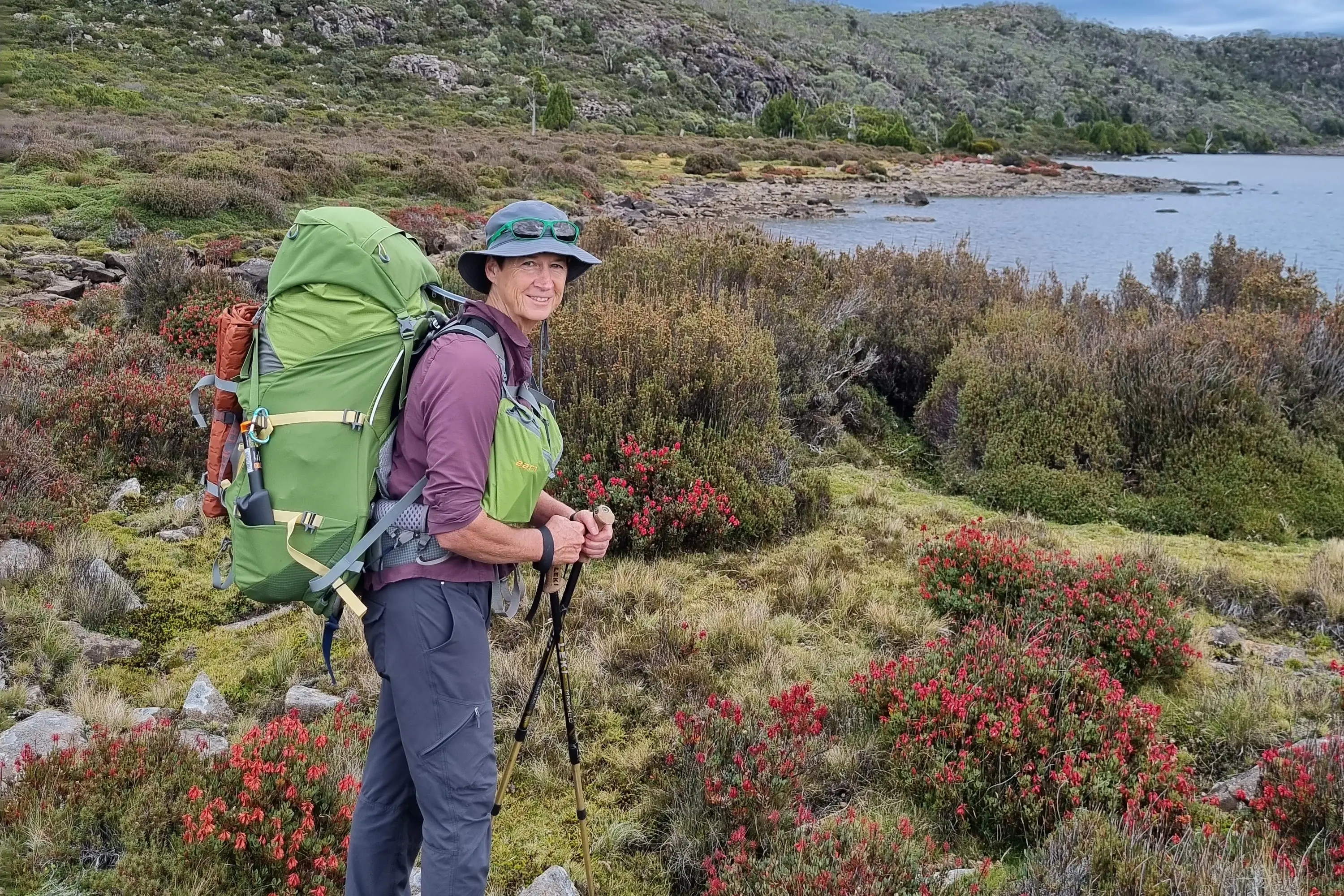
Jenny McKenzie was born the Central Victorian town of in Elmore and grew up on her family's farm, which is still running today. Jenny studied outdoor education and secondary teaching in Bendigo and has lived in the Beechworth area for 11 years.
What do you do workwise?
My early years were spent working outdoors for a not-for-profit outdoor education organisation, where I had the privilege of taking young people into nature on adventures ranging from three days to 35 days in length. I was fortunate to spend around 28 years with that organisation, building experience across a number of roles that eventually led to senior leadership positions across a couple of states. My love of being outdoors, supporting people, and working with horses led me into further training in a variety of healing modalities, and I now work alongside my life partner at Wild Sacred Medicine. I also teach Equine Reiki, help out on the family farm in Elmore, and have volunteered on the Soulcraft Australia and New Zealand (SANZ) board since 2019.
What led you to your role/career?
During my outdoor education career, I came across a book called Soulcraft by Bill Plotkin, which changed how I wanted to be outdoors with people, and opened my eyes to what was possible for us individually, collectively, and for the more-than-human world. Around the same time, I stumbled into Reiki energy healing — a real challenge for the practical, outdoorsy person I was back then.
What do you love about your work?
I love being able to hold space for the co-creative healing and ‘wholing’ process that a person, or an animal, is moving through.
What do you do in the community?
In the past I volunteered at the Beechworth Food Co-op. My local volunteering is limited now, as I'm running a number of small businesses, alongside being a volunteer board member for SANZ.
Is there an important community issue that you think needs addressing? What would you do to solve, change or improve that situation?
Equitable access to health services and housing. Maybe we could get more imaginative and collaborative about it — using a ‘Possitopian’ approach to future thinking that holds both harder realities and hopeful possibilities at once, rather than doom or blind optimism. That means genuinely listening to people already going without safe housing or timely healthcare, using data on our growing, ageing population to plan ahead, and being open to bolder options like cooperative housing models and broadening visiting health services. It also means building real resilience and mutual support locally, rather than waiting for someone else to fix it.
What do you see as one of the most important current world issues?
Our fragile global geopolitical situation, and our capacity (or lack of it) to recognise that we are an integral part of the web of life. What we do to others, including the more-than-human world, we ultimately do to ourselves.
If the person you would most like to meet came to Indigo Shire (past or present), or was already here, who would that be, what would you show them, and why?
I think Mary Oliver. Our natural environment here is putting up such a good fight to recover from the scarring of the gold-mining era, and the flora, fauna and fungi are astounding. The trails, rivers, lakes and incredible off-track spaces to explore locally and across the north-east, are what drew me here in the first place. I'd love to share that with Mary Oliver, and have it turned into poetry or prose in her voice, that would be incredible to read.
What book are you reading?
‘Is a River Alive?’ by Robert Macfarlane, and Mary Oliver's small collection of poetry, ‘Dreamwork’.