PHOTO
75057.0
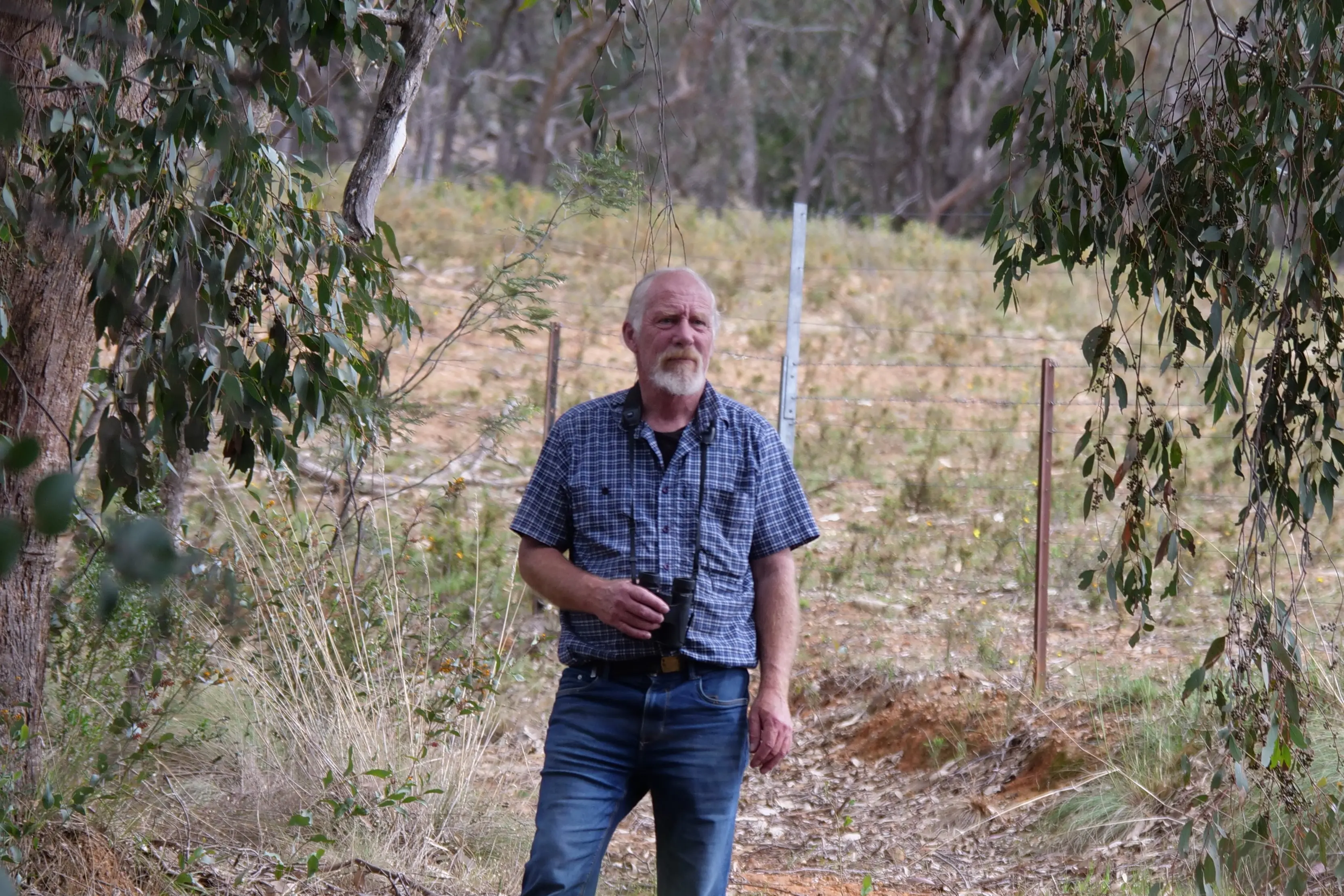
Jim Blackney was born in Koo Wee Rup in South Gippsland and moved to the North East in 1997 where he has lived in Stanley for the last 29 of 30 years.
What do you do workwise?
I am a Landcare facilitator for the Mid Ovens Landcare Consortium which is made up of eight of our local Landcare groups. My job is to help the groups in funding submissions and the whole range of different Landcare works these committed people do.
What led you to your role/career?
I lived on a farm when I was young and was always out in the bush, or out on Western Port Bay, and very tuned in with the outdoors and nature. I realised early on that our environment needed work, and I enjoyed that type of thing. It was a natural progression for me to end up working with Parks Victoria, then Trust for Nature and now Landcare.
What do you love about your work?
I find it very rewarding working with others on the environment and the land. I get to work with some very motivated and talented people who care about our land and want to help others – that is something very special in today’s world. Helping teach people about our native plants and animals is a real buzz for me. We ran a spotlight night at Stanley a few months back and showed the kids live animals up close, then went bush spotlighting which was pretty special.
What do you do in the community?
I was a founding member of Stanley Landcare in the early 2000s, and the group is still going strong. I am a patron of both Little Nev’s and Tiny’s café as key social venues. I have been involved with the CFA over the years depending on my work situation.
Is there an important community issue that you think needs addressing?
I think one of our biggest threats is climate change. We are now seeing much more frequent and severe fires in our area and globally. Farming is now much harder and unpredictable from year to year. The bush is suffering with some common plants and animals becoming rarer.
What would you do to solve change or improve that situation?
There is very clear information on what needs to be done globally. There are some large-scale actions that can help reduce the impacts, but what is really needed is people to understand this. If the community is well informed, then we can pressure government to be more proactive. There are some simple steps all of us can take to help out, but we need to work collaboratively.
What do you see as one of the most important current world issues?
Definitely climate change at a global scale. While there has been some great work done, I believe globally we will need a major social paradigm shift to enable more work to tackle the problem.
If the person you would most like to meet came to Indigo Shire (past or present), or was already here, who would that be, what would you show them, and why?
It would be cool to meet Edward John Dunn (1844-1937), a geologist and in 1856 moved to Beechworth. He collected of minerals and rocks, and I would chat about his collection and what Beechworth was like at that time.
What book are you reading?
Brandon Sanderson’s “Rhythm of War.” I like sci-fi and fantasy for down time. We are very fortunate to have a great library in Beechworth and thanks to all involved.