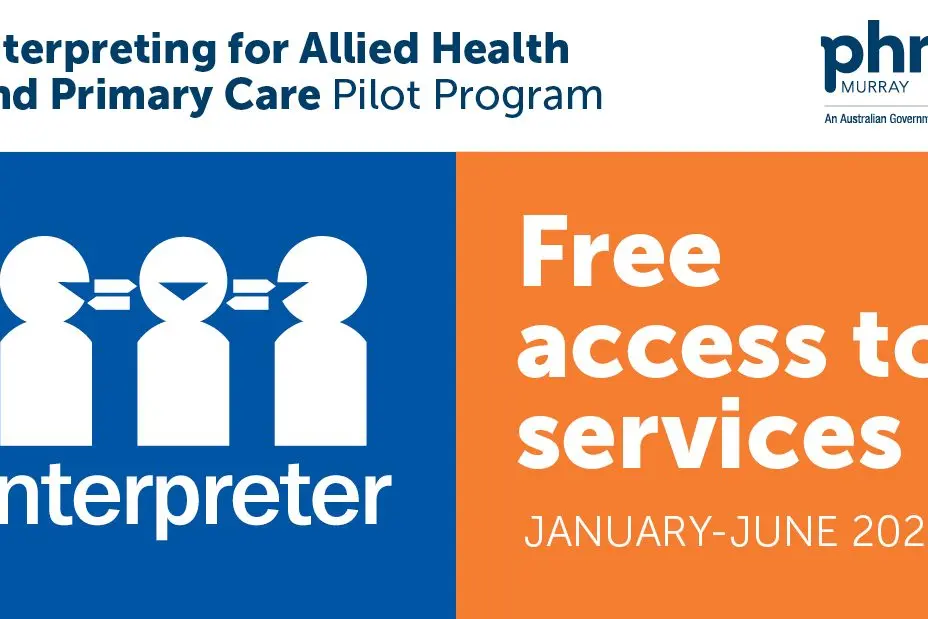
PRIVATE allied health and other primary health professionals in the region who were previously ineligible can now access free interpreter services - in person, on the phone or via video - to ensure patients from non-English backgrounds receive information in a language they understand.

Murray PHN is providing funding that enables local professionals to call or book in a time with a National Translating and Interpreting Service (TIS National) credentialed interpreter, in one of more than 150 languages, at no cost.

The Murray PHN region is home to more than 55,000 people who speak a language other than English at home, with Punjabi, Italian, Mandarin, Arabic, and Malayalam being the most commonly spoken languages.

Murray PHN’s recent Murray Health Report on multiculturalism outlines local data and community and health professional feedback on the health and service needs of this population group.

Murray PHN acting chief executive officer Jacque Phillips said that while many migrants attain high proficiency in English, others face challenges in understanding healthcare information that is not in their native language.

“For some people from multicultural backgrounds, language barriers play a part in them failing to get healthcare they need, and this can put people’s healthcare outcomes at risk," she said.

“It is important that culturally and linguistically diverse communities are supported to access timely interpreter services and translated health information.

“Being able to communicate clearly helps to provide more accurate diagnoses and effective treatment.

"It gives people a better understanding of their medical condition and improves their understanding of instructions for managing their health and wellbeing.”

Interpreters are required to maintain patient privacy and confidentiality.

There is no cost to patients or eligibility exclusions - even people without a Medicare card can access this service.

The Interpreting for Allied Health and Primary Care Pilot Program is funded until June 30, 2025.

Eligible healthcare professionals include:

• Audiologists

• Dentists

• Dental hygienists

• Diabetes educators

• Dietitians

• Exercise physiologists

• Mental health nurses

• Occupational therapists

• Optometrists.

• Physiotherapists

• Podiatrists

• Psychologists

• Social workers

• Speech pathologists

• Urgent care clinic staff

• Other primary care practitioners.

Health professionals can visit Murray PHN’s website for more information, at https://bit.ly/40aED34 or email multicultural@murrayphn.org.au.

Community members seeking to access additional resources can visit https://murrayphn.org.au/community/refugee-health/.