PHOTO
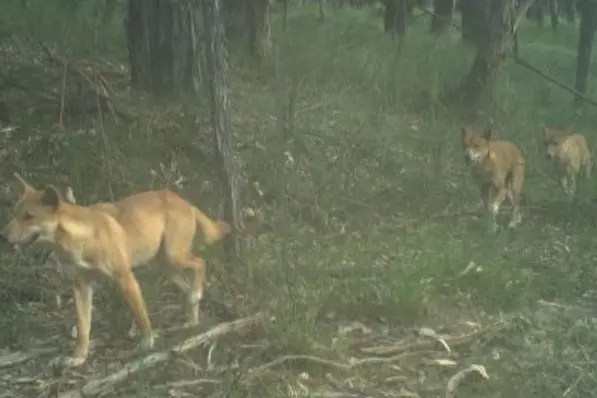
The Victorian government agency responsible to support the reduction of dingo and wild dog attacks on livestock is recruiting more field officers.
Four additional positions will boost the existing 18 field officers under the Vertebrate Species Management Program (VSMP) to combat the estimated 4900 dingoes in Victoria's high country (2022-23).
It comes as King Valley sheep producers have seen a record spate of dingo and wild dog attacks on livestock in recent weeks and calls have been made by locals for more resources.
Sheep have been attacked day and night in the southern parts of the North East region as consistent numbers of dingoes and wild dogs prey on sheep.
The issue was raised by Carboor sheep farmer Harry Bussell, who said it was taking a toll on farmers struggling to be on guard around the clock.
A Department Energy, Environment and Climate Action (DEECA) spokesperson said “we understand the toll livestock losses can have on farmers, both financially and mentally”.
“Farmers in the North East of Victoria, including in the high country and King Valley, have access to a number of tools to minimise the impacts of predation, including non-lethal measures such as exclusion fencing, as well as lethal control,” he said.
“The VSMP provides support to landholders, including in the North East to help mitigate the impacts of livestock predation.”
The 2025-26 Dingo Predation Management Work Plan in the Whitfield Zone involves non-lethal measures, ground baiting, trapping, and shooting.
Ground baiting is a proactive tool that supports landholders who are experiencing livestock losses from dingoes.
Trapping is listed under the plan as a reactive measure and has been running under the plan since July last year until 30 June and the plan will be renewed for the 2026-27 financial year based on recent community feedback.
Mr Bussell spoke of a trapper in the area who works long hours having to check traps on a daily basis right across the region.
"He has to inspect traps every day and he had 17 traps between Whitfield and Buffalo River," he said.
"You have to be incredibly patient when you're trying to catch dogs.
"You have to do all the work with the cameras to understand what they're doing and where they're going and then eventually you might catch one."
"The dogs have a scent memory in their nose and they store the smell so they get to know the scent of the trapper.
"When they smell his scent, they get very, very wary about what they do.
"They can tell when he's in Edi, then they smell the same scent when he's in Carboor."
All the services support individuals and communities experiencing livestock losses and other negative impacts due to dingoes.
This could include attacks or threatening behavior towards domestic animals and pets.
The 2025-26 State Budget invested an additional $9.2 million over four years in the VSMP, enabling inclusion of species such as foxes, feral pigs, goats and rabbits.