PHOTO
70156.0
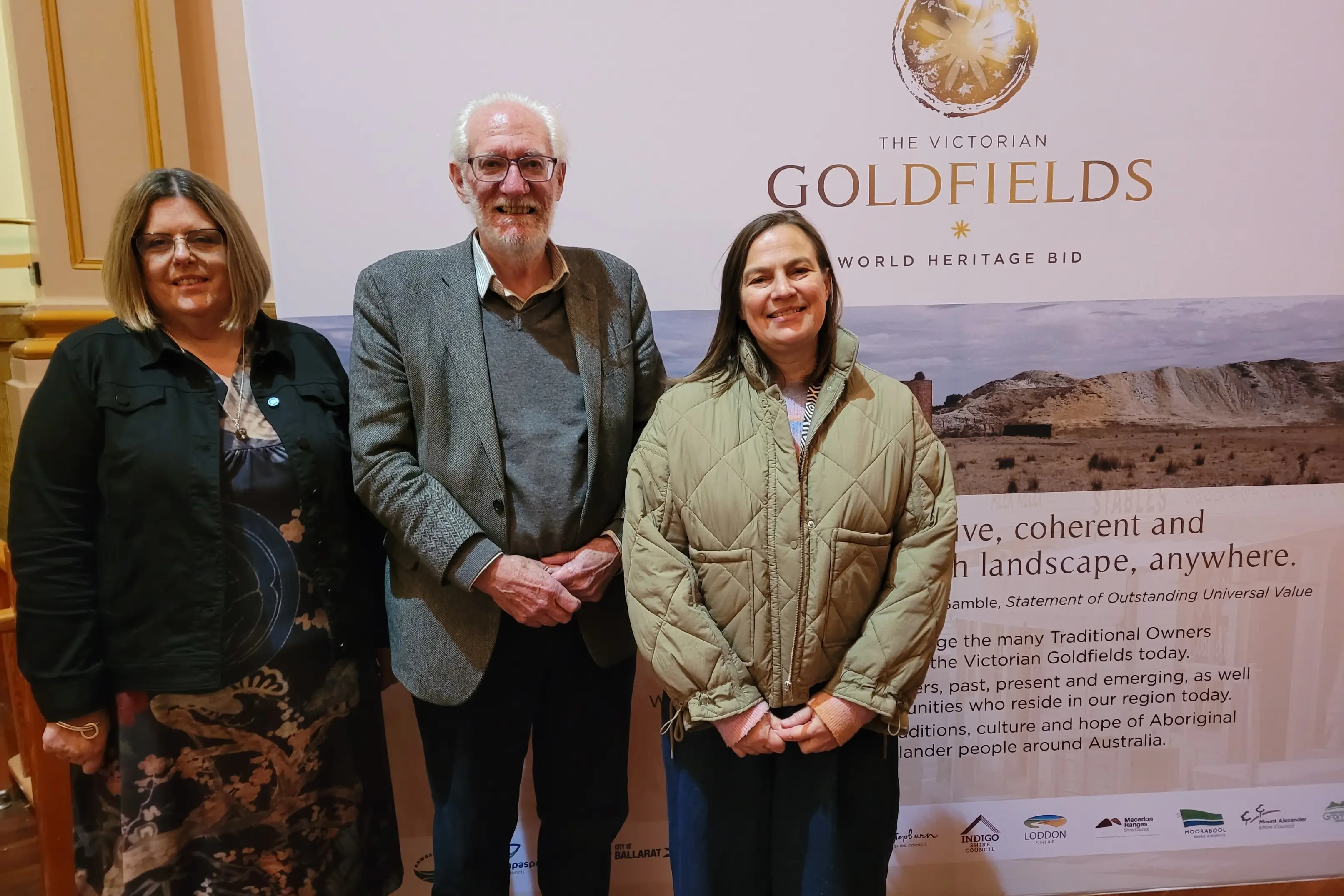
The Indigo Shire community and businesses had a chance to chat to the Victorian Goldfields World Heritage bid team at the Beechworth Town Hall last week.
Indigo Shire Council – one of 15 councils participating in the bid – hosted the event.
Interested people heard the latest developments from the Bendigo and Ballarat-based team in the four-hour drop-in session on 3 June.
A step-by-step process with the tentative listing gained in January last year, World Heritage bid team strategic advisor Trevor Budge said the Victorian government is moving to the next stage.
The adviser said a preliminary assessment application will be made to the federal government in September this year in the hope that they will then submit it to UNESCO.
“UNESCO seeks to establish credentials where outstanding universal value can be demonstrated with a set of criteria for world significance,” he said.
“If we get a green tick from UNESCO’s preliminary assessment assessors to proceed, then a fully detailed nomination can be submitted after a waiting period of 12 months.
“The earliest this could happen is February 2029 and then there would be an 18-month assessment process by UNESCO, with a final decision expected in the middle of 2030.”
UNESCO has 10 criteria where at least one must be met to keep moving forward.
The bid team’s proposal is to meet two, one being an outstanding example of a type of building, architectural or technological ensemble or landscape which illustrates a significant stage or stages in human history.
The other is to be directly or tangibly associated with events of outstanding universal significance.
A global and national comparative analysis has been undertaken to support this claim.
“We're saying the gold rushes were a major event in human history,” Mr Budge said.
“Victoria has the best surviving example of a gold rush from the 19th century, because there were others – including California, New Zealand and Alaska.
“What survives in Victoria is the best example of the whole breadth and scale and scope of gold mining that happened in the 19th century whether individual buildings, the collection of towns, or different types of mining techniques.
“We are the only goldfield in the world that has all the different types of gold mining."
These include alluvial, big, deep quartz reefs (in some cases mined to the depth of 1500 metres), open cut mining, hydraulic sluicing and more.
“These different types of gold mining were happening in the Victorian landscape because Victoria has an extraordinarily extensive area with gold,” Mr Budge said.
“Most of the world's gold mining areas were much smaller than in Victoria with its geology.”
World Heritage and Regional Development lead Susan Fayad said the story being told also includes the impacts of the gold rushes and goldmining in the landscape.
Ms Fayad said the team is working with First Peoples to tell their story as well with cultural landscapes that existed beforehand.
Standout features for Beechworth as the administrative centre for North East Victoria in the goldrush attracted the scale of heritage buildings in the town.
Ms Fayad said other distinguishing features that contribute to the story included the high proportion of Chinese people in the North East Ovens goldfields including Beechworth.
Another is Beechworth, regarded as one of the best preserved Victorian goldfield towns.
“The collection of goldfields tells the whole story with criteria applied to all,” she said.
Indigo Shire Council tourism team manager Susannah Doyle said the drop-in session had been valuable with engaged people showing interest in the bid team’s information.
“We look forward to doing a lot more of these sessions,” she said.
Ms Doyle said Indigo Shire Council will be working with the Beechworth Historic Precinct Partnership and other groups.