PHOTO
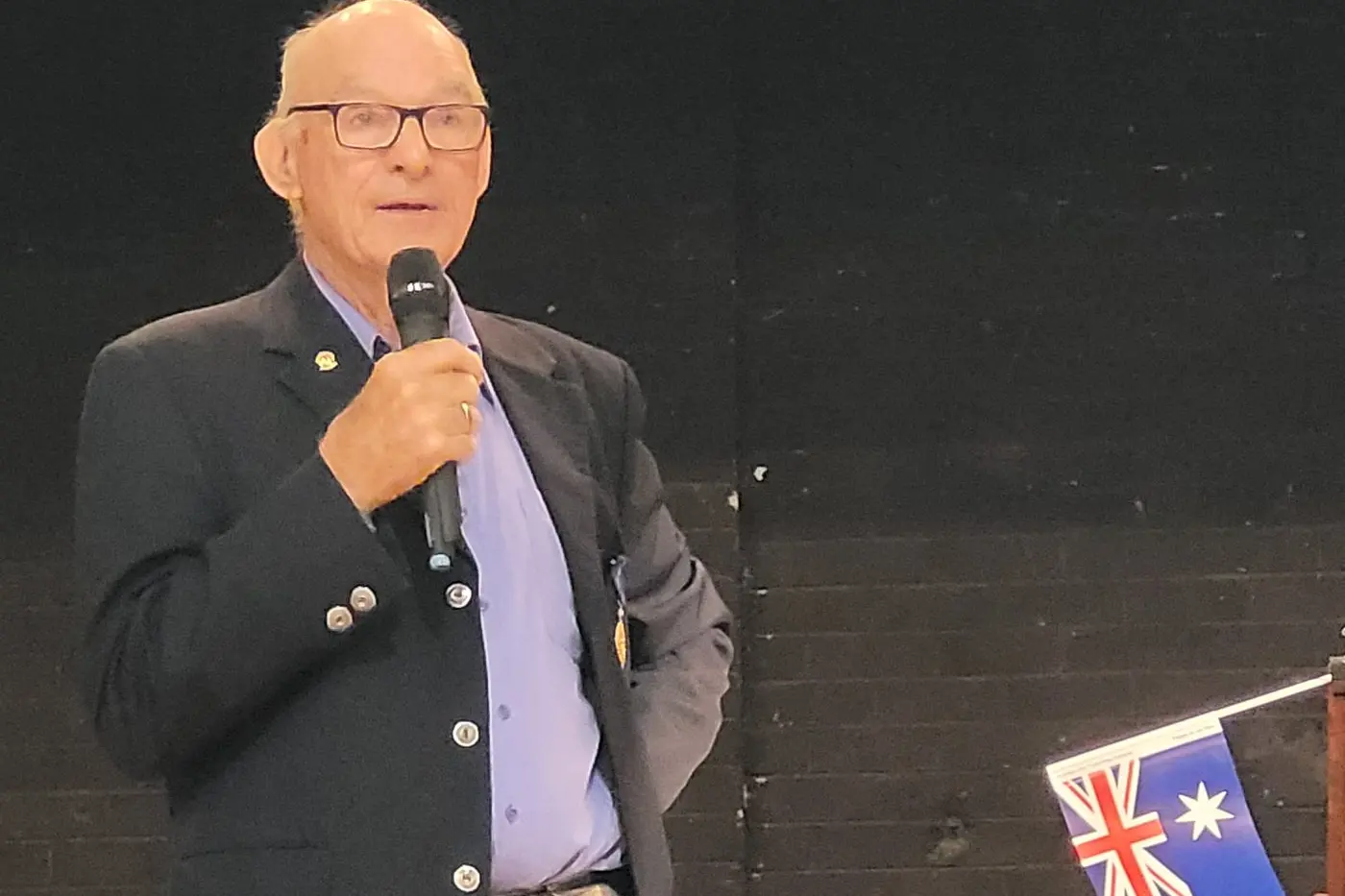
THIS year’s guest speaker at Beechworth’s Australia Day celebrations advocated for the history of Aboriginal innovation and invention to be understood and respected by all Australians.
Wooragee’s Dr Pieter Mourik delivered a fascinating talk on Aboriginal ring trees.
The retired medical professional who has worked alongside Aboriginal Elders in researching the trees said it is now known that the nation prior to colonisation had been mapped by First Nations people.
Dr Mourik said each group’s boundaries on country, directions and landmarks had been marked by manipulating young and flexible gum trees known as ring trees.
“The boundaries were documented in 1940 by the Tindale Map,” he said.
The map showed the distribution of Aboriginal groups published by the late anthropologist Norman Tindale.
“Very few Australians have ever heard about these magnificent, historic landmarks," Mr Mourik said.
The researcher spoke about how knowledge should be shared between Aboriginal corporations and all Australians for a greater understanding about ring tree significance as well as Aboriginal history and culture.
He said people needed to learn about the trees for their preservation from the shared knowledge to help identify, record and protect remaining trees.
“It's not only the tree itself but the site it represents,” he said.
“The trees need to be located, registered and mapped by qualified Aboriginal groups and legally protected by law through the Victorian Aboriginal Heritage Register.”
“Rings trees are protected in NSW but not in Victoria,” he said.
Dr Mourik’s Aboriginal ring tree project clinched a win in the Indigenous Culture category in last year’s annual Keep Australia Beautiful Victoria (KABV) sustainability awards.