PHOTO
63406.0
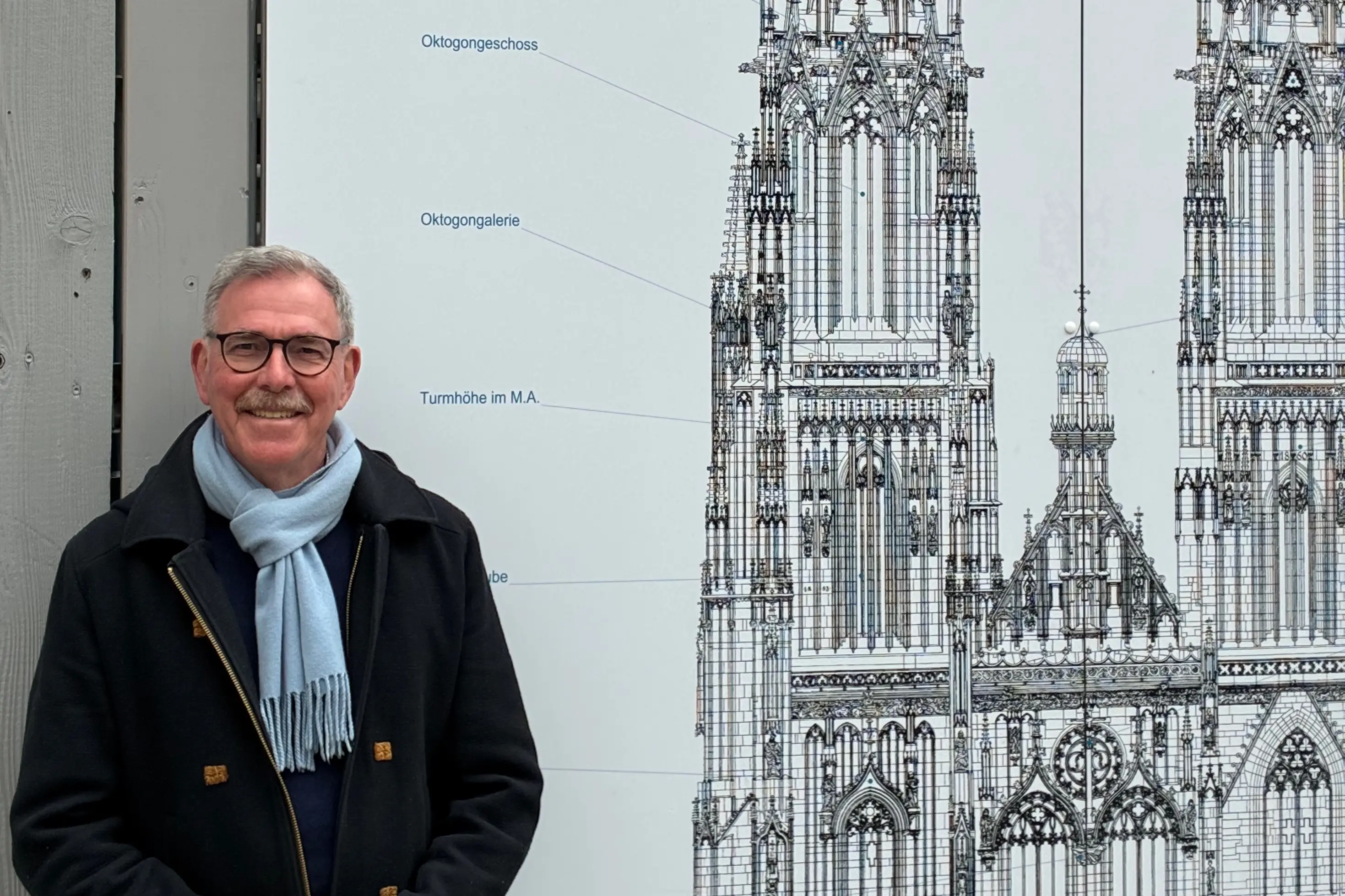
Jamie Kronborg’s parents were graziers south west of Hay, where he was born, in the western Riverina.
“It’s an amazing place, flat as a tabletop and smothered in saltbush and bluebush, almost tree-less, where the arc of the landscape mirrors that of the sky,” he said.
“I’ve lived with my husband Peter near Three Mile Creek south of Beechworth for 13 years, not so far from the Murmungee farm taken up by my Scottish-born great-great grandmother, recently widowed, in 1874."
What do you do work-wise?
I’ve worked for years in media, communications and marketing. After boarding school in Melbourne I was offered a place in RMIT’s then-new journalism course and a cadetship at ‘The Daily Advertiser’ in Wagga Wagga. I took the cadetship and went on to a career in agricultural journalism before moving to a role in wool marketing and, afterwards, food marketing. I returned to reporting as editor of the ‘Ovens and Murray Advertiser’ from 2013, when we moved from Sydney to Beechworth, until 2018. I’ve worked most recently in community engagement with North East Water.
What led you to your career?
I found English, literature, landscapes, art and music, especially for organ, compelling. In year 12 our English master took us to watch the film Macbeth, directed by Roman Polanski and set in Scotland’s bleak wilds. It was riveting. I recently saw the great British actor Judi Dench in ‘Who do you think you are?’ and its sequel, where she discovers that her Danish eight-times great-grandfather visited London with Denmark’s king in 1606, the year Shakespeare wrote ‘Macbeth’, and likely saw the play. Both aristocrat and playwright may have met: serendipity through words across generations.
What have you loved about your work?
Editing this newspaper gave me the best introduction to the Beechworth community you could imagine, meeting and reporting on extraordinary, everyday people in an extraordinary place.
What do you do in the community?
I’m Beechworth History and Heritage Society’s president. I’m also on Beechworth’s Anglican parish council and help to convene the church’s concert series. For me, history, art and music are eyes into our world.
Is there an important community issue that you think needs addressing?
We need to work hard, with open hearts and heads, to reconcile with First Nations people.
What would you do to solve or improve that situation?
I’d welcome community-driven makarrata, where we engage honestly with First Nations people in truth-telling and agree steps for reconciliation and peace-making. We should also acknowledge and commemorate Australia’s calamitous frontier wars.
What do you see as the most important current world issue?
Actively responding to reduce humanity’s impact on our climate and environments.
If the person you would most like to meet came to Indigo Shire who would that be, what would you show them, and why?
Artist Ben Quilty. We met when he was judging Tasmania’s Glover Prize for landscape painting in 2017. He told me at the time: “The camera really superseded the role of painting more than a hundred years ago. (So) I think the role of painting and the painter as artist is to examine more of the psychology or history or social constructs that led to you being interested in this scene.” I’d love to walk with him through our landscape and dive into what he sees and senses.
What book are you reading?
Ulrich Raulff’s ‘Farewell to the Horse: The final century of our relationship’ in which he writes of the role of this supremely powerful yet sensitive animal in making modern society, including our own communities.