PHOTO
62885.0
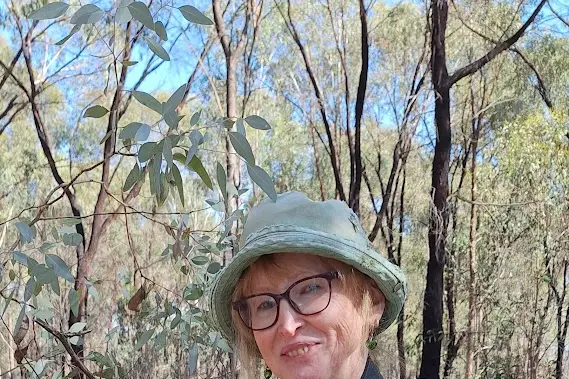
Margaret Considine is originally from the Melbourne suburb of Essendon. After a long stint in Canberra, she moved with her family to Chiltern in 2019 to their beautiful bush block, adjacent to the Chiltern-Mount Pilot National Park.
“Our house has been hand-made by the previous family – an incredibly artistic mob - using hay bales, mud and recycling as the themes. We are off-grid, have our own water and are surrounded by wildlife,” she said.
What did you do workwise?
Most of my life I’ve worked in areas that interest me – the environment and ornithology (the science of birds). I’ve crawled Victoria’s western plains assessing cricket populations, have been a researcher, writer, or editor on projects such as the 'Atlas of Australian Birds' and the 'Handbook of Australia, New Zealand and Antarctic Birds', escorted Prince Charles and Princess Diana through bird hides and helped run a small publishing business in Collingwood. After 14 or more years with the Commonwealth environmental department tackling environmental policy and law, I called it quits, retired and made for Chiltern.
What led you to your role/career?
My interests stemmed from my most wonderful father. A frustrated farmer, every weekend we squashed into the family car in Melbourne – six kids, Mum and often Nanny and Grandpa – to his isolated farm block where we kids would wander wildly through farms, sheep and bush. It was a treasure chest for young curious minds. I’ve carried Australian wildlife in my heart ever since.
What did you love about your work?
Helping biodiversity and the natural environment hang in there against the ever-demanding needs of humans gives me happiness and a sense of legacy (though sometimes I’m afraid I do despair).
What do you do in the community?
My volunteer roles centre around wildlife, including with the Friends of Chiltern-Mt Pilot National Park and local landcare programs. Volunteering for these groups means I can continue to help biodiversity, as well as make friends, stay active and eat a good supply of cake. The people are great, and it’s rewarding to plant a tree that may be there for hundreds of years, and its offspring for thousands.
Is there an important community issue that you think needs addressing?
After the recent week of 40-plus degree weather and living with increased bushfire threats, I think preparing for significant changes to our local climate needs to be taken seriously.
What would you do to solve change or improve that situation?
I think councils need to better address issues such as ensuring urban development is sustainable – is there enough water for increased populations, are we putting housing in safe insurable places, is there latitude for wildlife to move and for wildlife refuges, do communities have practical emergency plans in place.
What do you see as one of the most important current world issues?
Leaving a stable, safe, biodiverse and healthy world for future generations.
If the person you would most like to meet came to Indigo Shire (past or present), or was already here, who would that be, what would you show them, and why?
I would show the First Nations artists who drew the thylacine at Yeddonba Aboriginal Cultural Site those thousands of years ago and tell them I love it.
What book are you reading?
‘Devotion’ by Australia author, Hannah Kent. It centres on Lutherans who settled Hahndorf in South Australia.