PHOTO
70676.0
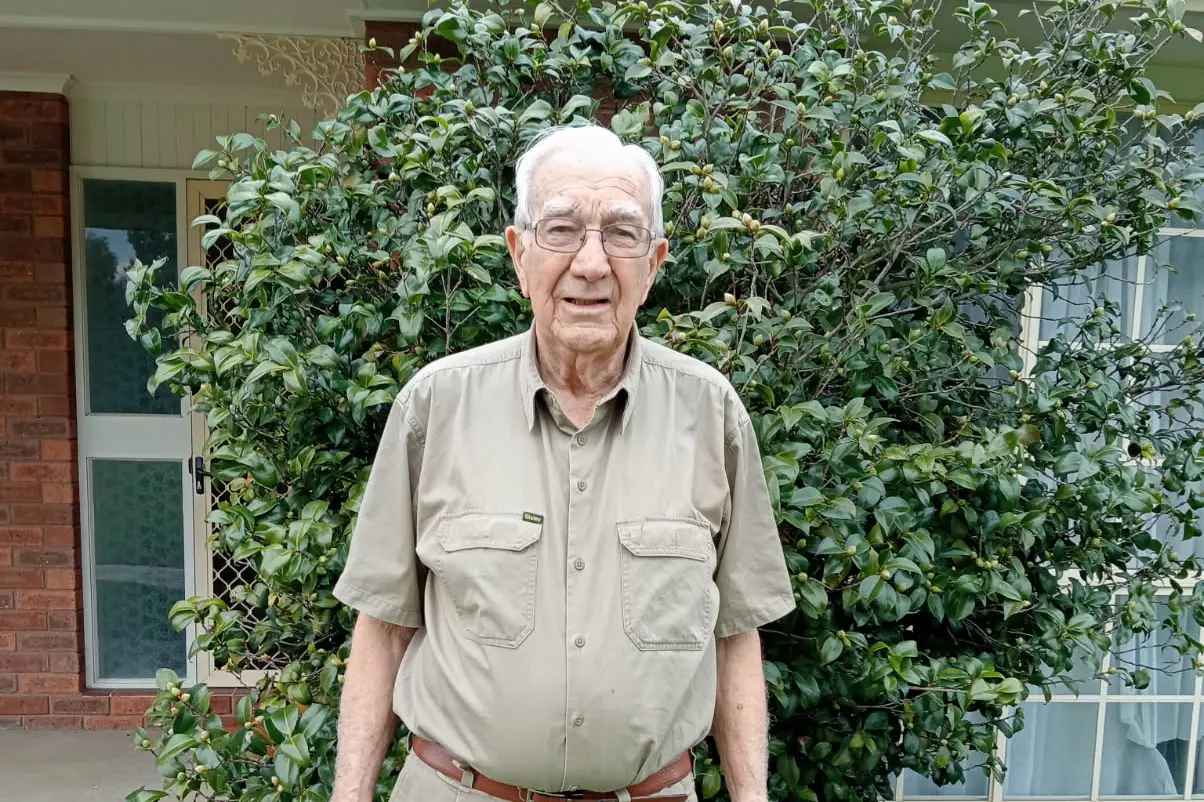
Alan Pleitner was born in Shepparton and with his wife moved to Wahgunyah in December, 2001.
What did you do workwise?
I was a member of the Victoria Police, retiring in 1998, after 36 years’ service.
What brought you to your role/career?
I saw how one could contribute beneficially to society and help those who sometimes could not fend for themselves. I had grown up in the country and had seen how the local policemen were part of the community and kept a lot of kids from getting into trouble.
What did you love about your work?
The variety of experiences in general duties work and later guiding and encouraging the junior staff to develop the proper work ethic.
What do you do in the community?
I am a member of seven community committees all of which give me much pleasure. One is the Wahgunyah Progress Association where I have been a member since 2003. I suppose in some way it could be seen as still serving the public. I believe that one should leave a community in a better condition than how one found it. I hope I have done this in the North East.
Is there an important community issue that you think needs addressing?
The lack of recognition of the value of volunteers is disappointing. This year there was no recognition by Indigo Shire Council in the western side of the shire of the many volunteers during National Volunteers Week. Governments do not recognise that volunteers often provide services which would otherwise prove costly for governments to carry out.
What would you do to solve, change, or improve that situation?
Give proper recognition to those who volunteer and give time and effort to help their community. Too often it seems that many are given honours for merely doing their job, often with handsome remuneration. Most volunteers I know do not seek recognition but, after being involved with volunteers and volunteering for over 50 years, I know that they respond positively to praise and recognition.
What do you see as one of the most important current world issues?
The terrible clash of cultures and religions through mass immigration, both legal and illegal. Unfortunately, we are witnessing more of these conflicts far too often.
If the person you would most like to meet or knew, came to Indigo Shire or was already here, who would that be, what would you show them, and why?
I would like to meet with John Foord, the man who first settled in Wahgunyah in 1839 and Lindsay Brown who planted the first vines in the now Indigo Shire at Gooramadda in 1851. I would be interested in their opinions about what they could see now as to how it matched their dreams of the future. What would be their take on the outcome from them importing the ways of their birthplace to this rich broad land of opportunity?
What book are you reading?
‘A Whispering of Trees’ by Carol Rosenhain and Peter Newbury. It is a book about the aftermath of the actions which arose from the first murder in which I was involved as a detective in 1971. It recounts the life of a young girl who witnessed her father shoot her young brother dead and wound himself in an attempted suicide. The girl was put into the hands of the State welfare system as a Ward of the State. As well as her brother, she was truly a victim of her father as well as the welfare system.