PHOTO
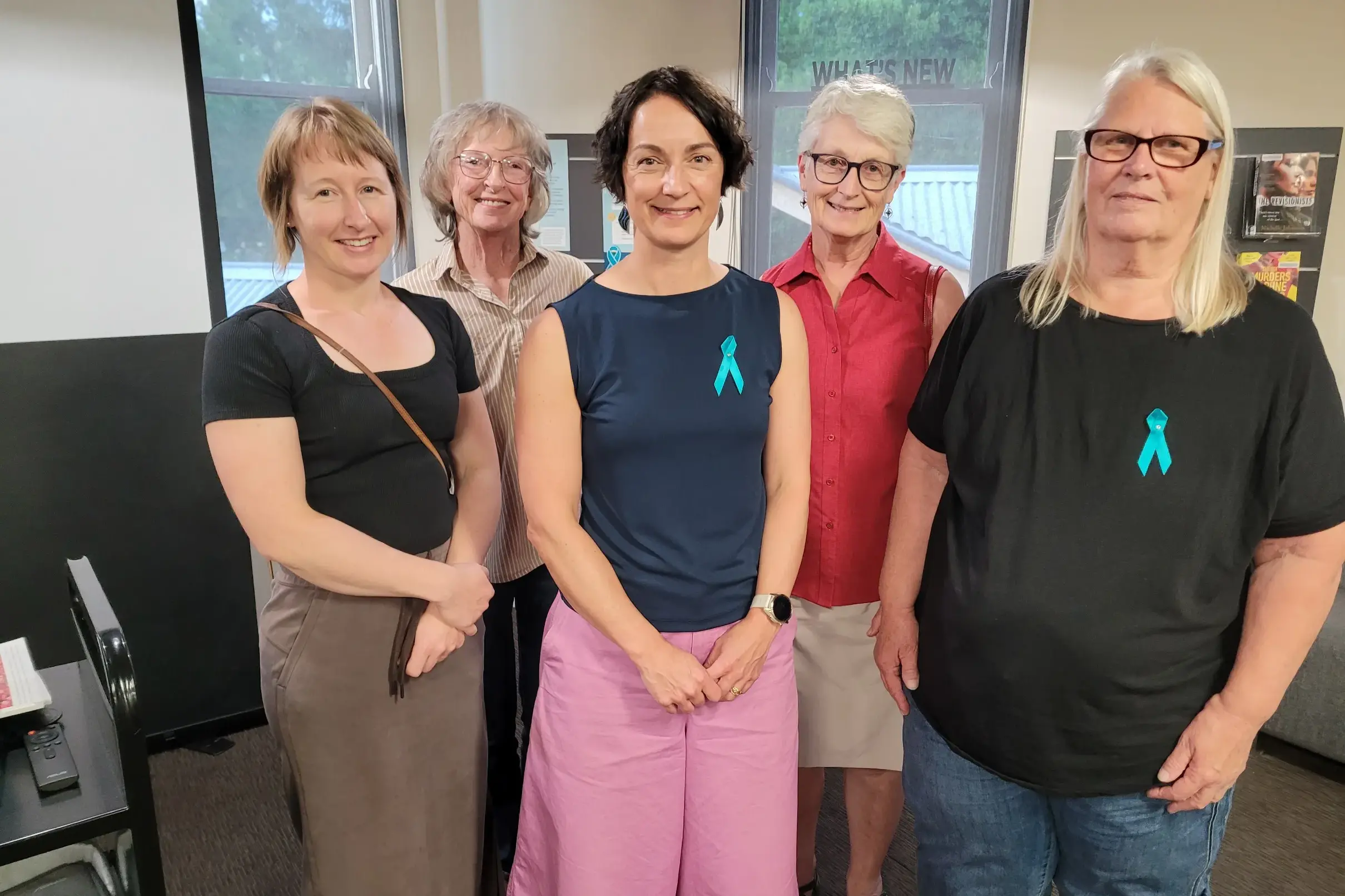
For Beechworth mother Anne Barlow a talk on ovarian cancer awareness and early detection held at the Beechworth Library last week had vital messages for the community.
Ms Barlow tragically lost her 46-year-old daughter Clara (Charlie) Crompton to the little-known deadly disease in September 2023.
“We don't know enough about the symptoms and Clara was in stage four when diagnosed,” she said.
“She battled for 13 months, had a big operation and lots of chemotherapy but it wasn't enough.”
The talk by Beechworth Surgery’s Dr Christie Rodda accompanied ‘Charlies’ story – an exhibition featuring a remarkable needlework of the Veil Nebula Galaxy by Clara begun before her ovarian cancer diagnosis and completed by her mother Anne.
Ms Barlow said the exhibition had been a great opportunity to make people aware of ovarian cancer throughout February for Ovarian Cancer Awareness Month.
“A lot of people in town remember Clara because she grew up and went to school here,” she said.
Ms Barlow said she was pleased to see such a good turnout that drew more than 40 people.
Dr Rodda said while not a common cancer, it is a deadly one when picked up too late.
“It’s important that we raise awareness, not just about symptoms but we can understand our own family histories as genetics can play a big role in ovarian cancer,” she said.
She said progress at reducing mortality lacks due to the cancer picked up too late because of its vague symptoms and often patients dismiss them.
“Seventy per cent of ovarian cancer is picked up in later stages, when it's much harder to treat," she said.
“We might be able to pick it up at an earlier stage, when our treatments are more effective from early conversation with their doctor about symptoms,” she said.
“Know the common symptoms of ovarian cancer, and particularly symptoms that are persistent or getting worse, and have them checked."
Dr Rodda said although research is ongoing, screening tools are not available.
“We're relying on patients to come to us when they have symptoms,” she said.
“We need more research into ovarian cancer, screening and treatments, so we have more effective treatments when picked up, so that we can reduce mortality from such a lethal cancer."
Dr Rodda said around 1900 cases of ovarian cancer are diagnosed in Australia every year.
“In looking at Beechworth, we’re usually managing one or two women at Beechworth Surgery at any one time,” she said.
Dr Rodda said some symptoms to be remembered are persistent bloating, early fullness or loss of appetite, abdominal pelvic pain, and bladder or bowel change habits (B.E.A.CH).
Beechworth librarian Julie said knowledge is power.
“The more information we have helps in detection as it's just not on a lot of women's radar,” she said.
“Health literacy and countering misinformation is important."
Julie said many people often go to ‘Dr Google’ if they have symptoms and is not the best way to get information.
“Dr Rodda also stressed the point of advocating your own health to your doctor requesting tests or expressing your concerns and not to let things go," she said.
“The talk was meaningful to me because my own mother had ovarian cancer, and we were blindsided when she was diagnosed.
“It wasn’t on her radar at all because there was no family history.”
Julie said the breakthrough in research is a missing link for the hard to detect cancer.
“Dr Rodda talking about ovarian cancer and symptom awareness opens up the conversation with information that can be shared with other people spreading the awareness,” she said.
“It’s our only tool at the moment."