PHOTO
72945.0
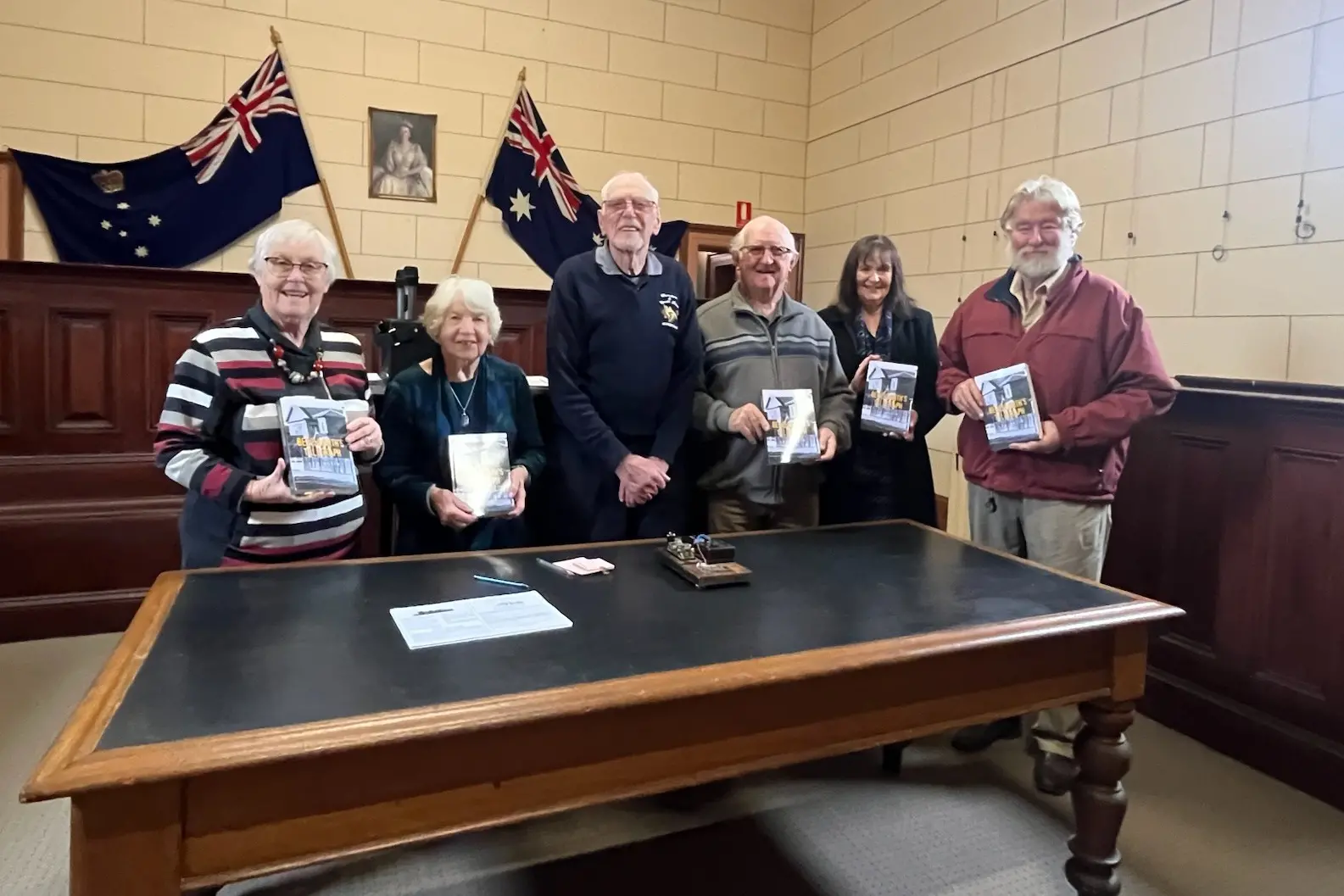
History lovers gathered at the Old Chiltern Courthouse on Saturday to learn from a professional morse code operator about the history of the Beechworth Telegraph station and early communication networks.
Local Beechworth historian Leo Nette delivered an insightful account from his recently published book titled ‘Beechworth’s Telegraph'.
Cornishtown’s Tony Marshall said he was intrigued how people in early colonial days had enough thought and direction to plan ahead.
“They used the technology at the time in implementing communication networks with the use of morse code,” the former electrical engineer said.
"The early communication pioneers were well ahead of their time.
"They already had cell batteries for the network to put the lines in place to connect Beechworth to Sydney and Melbourne at the time as well as to shire communities in Chiltern and Rutherglen.
"Using morse code for communication was also less inviting to bush rangers in the gold rush days too."
Mr Marshall said Leo's talk generated many interesting questions from an engaged audience such as signal strength over distances.
“Leo explained there were repeater stations 300 kilometres apart to maintain the signal line repairs using patrol crews,” he said.
Mr Nette said he enjoyed sharing his knowledge of the telegraph’s history and giving an insight on why he wrote the book.
The historian spoke about Beechworth and the telegraph as well as how it related to the region including Chiltern.
“The first line came up from Melbourne in January 1858 through Beechworth to Wodonga at the same time until a line came down from Sydney and connected to Albury,” Mr Nette said.
“Lines branched out from Beechworth to Chiltern in 1861."
Lines from Chiltern to Wahgunyah stopped there with Rutherglen missing out for a couple of years.
In relating the telegraph to Chiltern, Mr Nette said he discovered morse code operators between 1878 and 1901 were all female, becoming all male operators from then on.
Chiltern Courthouse committee member Lois Hotson, said the talk had been a great success with close to 30 people drawn to the event.
“They came from around the region including Beechworth, Wangaratta, Cornishtown as well as Chiltern locals,” she said.
Ms Hotson said recorded history is beneficial to towns with the use of morse code in a bygone era.
“It’s great to bring it back for people to learn about its history and Chiltern’s Post Office role, too,” she said.
“It can also be compared to modern day communication.
“Communication by morse code was a very important part of the gold rush days particularly in Ned Kelly country.”
Ms Hotson said Leo presented a signed copy of his book to a delighted courthouse committee.
“Everyone enjoyed a get together over afternoon tea following Mr Nette’s talk,” she said.