PHOTO
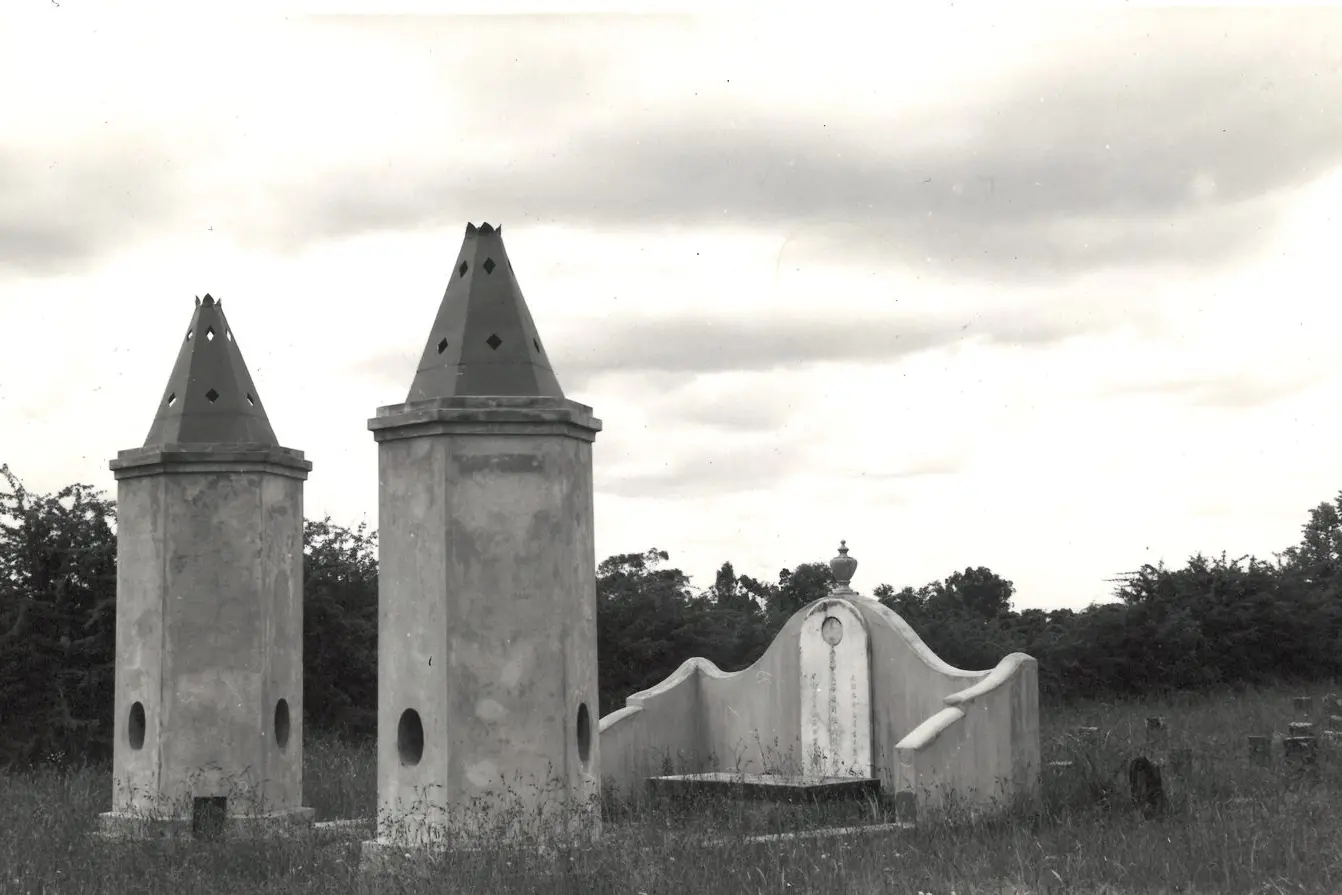
BUILT in 1857, the most evocative historic reminder of the presence of the Chinese in Beechworth is the twin ceremonial burning towers which stand guard at the Chinese section of the Beechworth Cemetery.
These monuments represent the rich culture of a racial minority group that was present during the Gold Rush era.
For the Chinese, who had to tolerate colonial ignorance, fear and racism, it was vital that if one passed away in a foreign country, they would be given culturally appropriate funeral rites.
The Victorian Colonial Government had attempted to prevent the Chinese from entering the colony during the Gold Rush by placing an extra tax on those arriving in Port Phillip Bay.
The Chinese had circumvented this by arriving in other ports such as Adelaide and walking overland on foot to arrive in the Ovens and other goldfields.
However, the attitude of racial superiority and cultural ignorance was prevalent from as high as the government and pervaded most aspects of colonial life. Brought up on a diet of Social Darwinism, the British population, no matter how poor or degraded, viewed itself as superior and all other non–European races as inferior.
This notion was finally challenged by the government's introduction of Asian migration in the 1970s post–Vietnam War refugee crisis but even then, notions of a White Australia still existed.
It was for the sake of fortune that many Chinese arrived in the colony in the 1850s to try their luck at searching for gold, having left family behind in China.
Many faced a harsh existence in which their efforts were often relegated to sifting through tailing heaps left behind the British miners.
Angered by the patient work ethic of the Chinese and their success rate in the leftovers of the other miners, many of British origin persecuted the Chinese.
An example of this was the Buckland Riot in which anti–Chinese sentiment on 4 July 1857 led to a brutal racial attack.
The intention was to drive the Chinese from the Ovens goldfields and peace was only restored by policeman Robert O'Hara Burke after many were beaten and robbed.
Three Chinese were killed, and many had their pigtails cut off in blatant disregard for custom and culture.
The ceremonial burning towers in the cemetery are representative of traditional Chinese custom in which offerings were made to the spirit of the deceased.
Not intended for food, these towers had the principal function of burning paper prayers and money in honour of the dead.
Considering that the town had a permanent Chinese camp, temple, shops on the outskirts of town, there are in total approximately 2000 Chinese graves.
With simple headstones, the Chinese section stands out as an amazing legacy of these oriental pioneers.