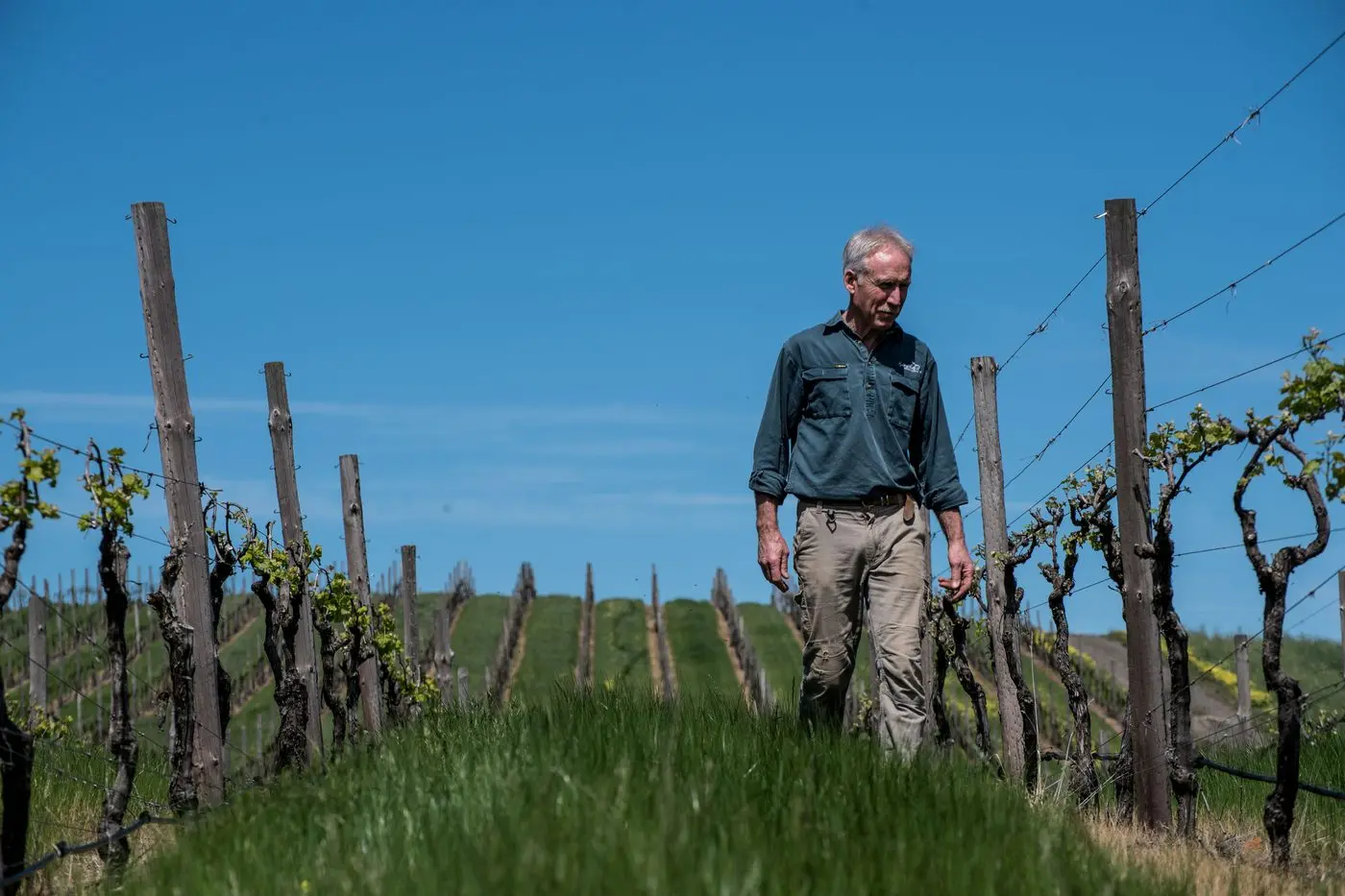
NORTH East viticulturist Mark Walpole likes to think ahead – sometimes decades.

As a champion of 'new' grape varieties that match long–term changes in climatic conditions at his Whorouly and, more recently, Beechworth vineyards, Mr Walpole says he can see no reason why production of grapes in the Murray Valley 'food bowl' couldn't be moved upstream in future to North East Victoria.

"We might see a fundamental shift of horticulture back towards the Hume Dam and to places like Rutherglen which have the soils," he said.

"There is no reason why we couldn't become a horticulture centre and use a greater percentage of the water available in our region."

Mr Walpole has spent many years attempting to reconcile those winegrape varieties that make the most of the region's climatic advantage with the commercial demand for the wines they produce.

His long career at Brown Brothers as a viticulturist saw him bitten by the non–mainstream grape variety bug and supported a move to plant touriga nacional, tempranillo and verdelho vines at the Walpole family vineyard at Whorouly in 1988.

"We were probably the first to grow tempranillo in Victoria and it's really done very, very well so we have expanded those plantings as time has gone by," he said.

"The grapes used to go to Browns and they made a cellar door only wine for many years that was very successful.

"As time went by they had to take a more national approach and they planted vines at Banksdale (King Valley) and Heathcote to ensure an increased supply.

"After a while at Whorouly, we thought we'd have to pull our head in a bit and plant something a bit more mainstream, so we planted cabernet, shiraz and chardonnay.

"Ironically the chardonnay is gone, the shiraz is gone and the cabernet is going."

Even still, during the past 20 years, the changing climate has brought forward ripening of pinot grapes at Beechworth from March to February.

That prompted Mr Walpole to graft his pinot vines over to grenache, aiming to push out the ripening to the middle of March or April.

"Ideally the best vines are made from grapes that ripen towards the end of the season, so having pinot ripen in the middle of February is really very challenging," he said.

"The heat at the beginning of spring is one of the most critical things related to ripening.

"A hot October and November tends to bring ripening forward, while if you get a cool October and November it tends to push the ripening out.

"I expect that will be the case this season based on the accumulation of warmer days over the growing period."

The North East Catchment Management Authority is undertaking a number of case studies, demonstrating how leading farmers from North East Victoria are managing the risks associated with climate change.

The Embedding Climate Adaptation in Agriculture project is working with the region's farmers to determine how the use of climate projections supports their farm management.

This project is supported by North East Catchment Management Authority, through funding from the Australian Government's National Landcare Program.